Choose your language *
Construction Expertise

Building Information Modeling

* This page has been translated via Google's Cloud Translation API. HOWOGE does not edit the content.

From the “digital twin” to life cycle analysis

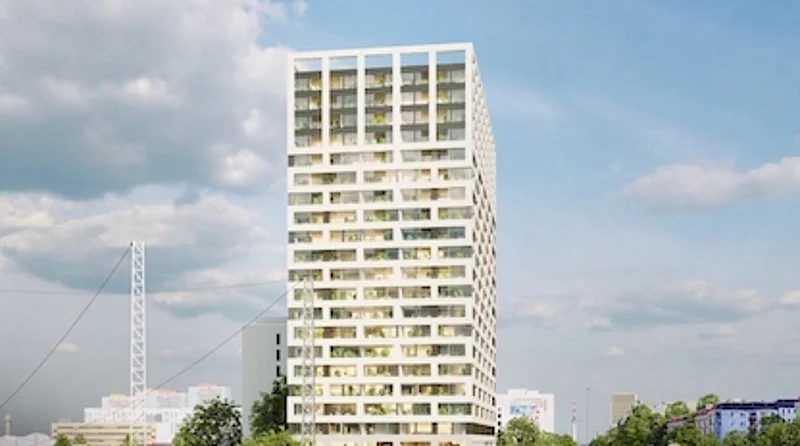
Improved planning quality. Greater cost certainty. Increased efficiency. Building Information Modeling (BIM) is associated with high expectations – as well as opportunities. In pilot projects like the "Liese" residential tower, BIM is being used for optimized planning and construction, taking into account the building's life cycle.

BIM (Building Information Modeling) is a methodology for networked planning using software. It is applied in the construction industry for building design and execution, as well as for the management of existing buildings. For this purpose, all important building data is digitally modeled and geometrically visualized in a computer model – creating the "digital twin" of a building. This allows physical and functional characteristics from various locations to be digitally accessed, displayed, and managed.
From the initial idea to the end of the life cycle

BIM relies on a 3D building model, which is linked to a database. All project stakeholders can access this model and the database, making coordination and communication much easier. Potential obstacles can be identified and avoided early on. Highly accurate calculations can be generated for tenders, contracts, and procurement processes. At the same time, the client can virtually walk through the future building during the planning phase and, like all other stakeholders, compare it to the established goals and standards. A further advantage becomes apparent during the building's operation: the data for every component is precisely recorded, from its brand and location within the building to its maintenance cycles. This opens up significant potential for highly efficient building management. Continuously maintained, all data essential for recycling building structures, building materials, or infrastructure elements is available at the end of the building's life cycle.

Pilot project for the “digital twin”